The Jacquard Weave: Architecture in Fiber
An analysis of the structural translation from digital image to woven textile, detailing the mechanical precision of the loom and the technical protocols for color indexing.
'MORROW & STONE
6 min read
The Jacquard Weave Stitched in Difference
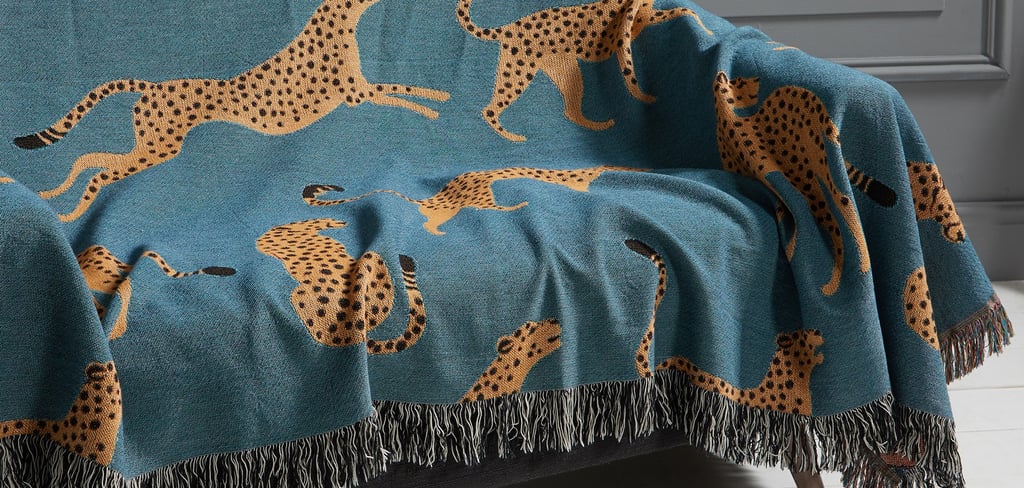
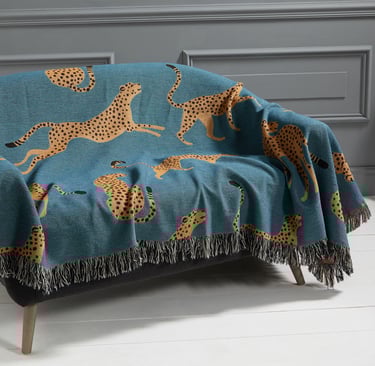
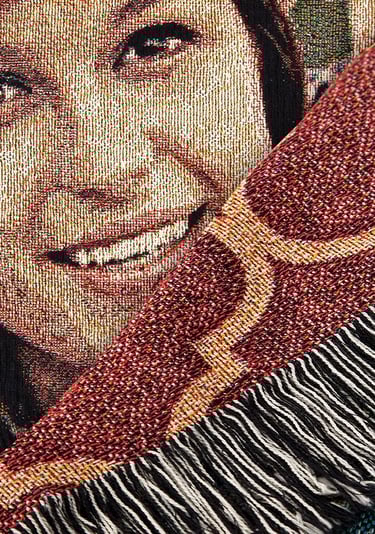
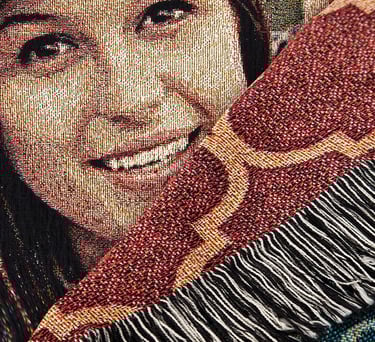
Jacquard woven blankets are one of our most popular print products. Surprising, right? Even more surprising is the fact that they’re actually not printed at all.
They’re made by weaving together a combination of monochrome and solid-colored cotton yarns on a machine called a Jacquard loom. Rather than printing onto the fabric or dyeing it like other print blankets you find, the loom itself is specially programmed to lift and incorporate the yarn into the weave — one strand at a time — until the desired pattern is achieved.
Our producer can recreate everything from photographs to graphic designs on your custom woven blanket, but there’s an art to replicating your image and getting it just right. So, if you’re looking to design your own custom blanket, make sure you read this guide on how to get the perfect finish, every time.
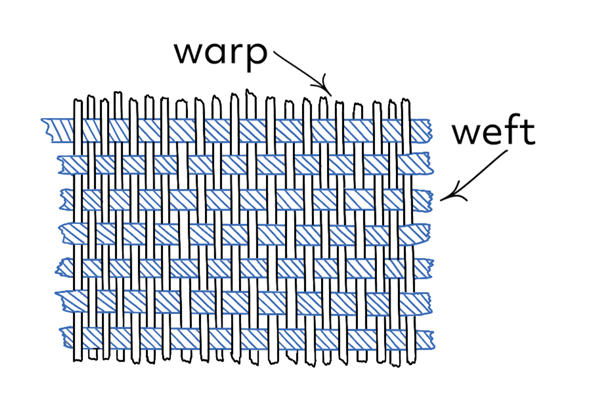
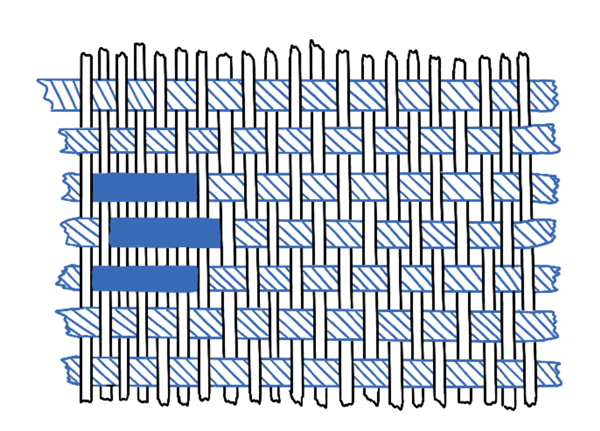
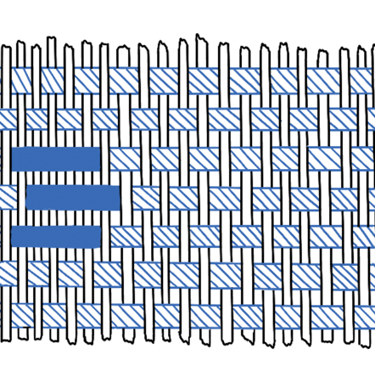
Demonstrated below, “Jacquard” is a special weaving technique used to create bespoke patterns and images within the fabric by controlling which threads appear on top at certain points in the weave.
Make sense? Now that you’ve got your head around Jacquard fabric, let’s move on to how to replicate your design on our Jacquard woven blankets.
Photographic images usually replicate well, but graphic designs need a bit more prep.
Technical note: When preparing artwork, choose the SKU that best suits your design:
H-BLANKET-WOVEN-ART for illustrations and artwork
H-BLANKET-WOVEN-PHOTO for photography
While we don’t require a specialised print file, there are some factors to consider when it comes to how accurately your image will be reproduced as a woven image.
Colors
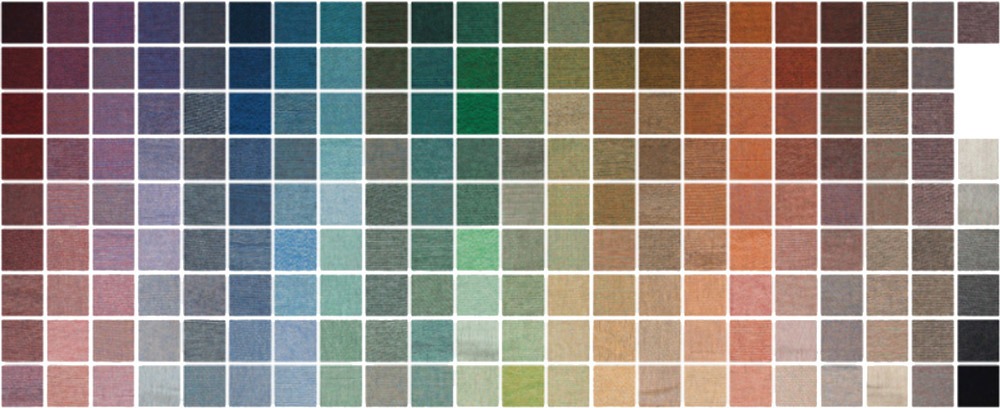
Our custom blankets are produced by weaving together six individual colored yarns to create 195 different colors. By combining red, blue, green, gold, white, and black yarns in different amounts, we get the color palette you see below, which excludes vibrant, hot, neon, or very yellow colors.
What is Jacquard fabric?
To understand what Jacquard woven fabric is, we first need to understand what’s meant by “woven fabric”. Woven fabric is created by passing horizontal weft threads over and under vertical warp threads to form a network of interlaced yarns, like so…
Considerations for graphic designs
As explained earlier, our Jacquard woven blankets are created by weaving together a combination of monochrome and solid-colored yarns, meaning some allowances need to be made for palette and resolution.
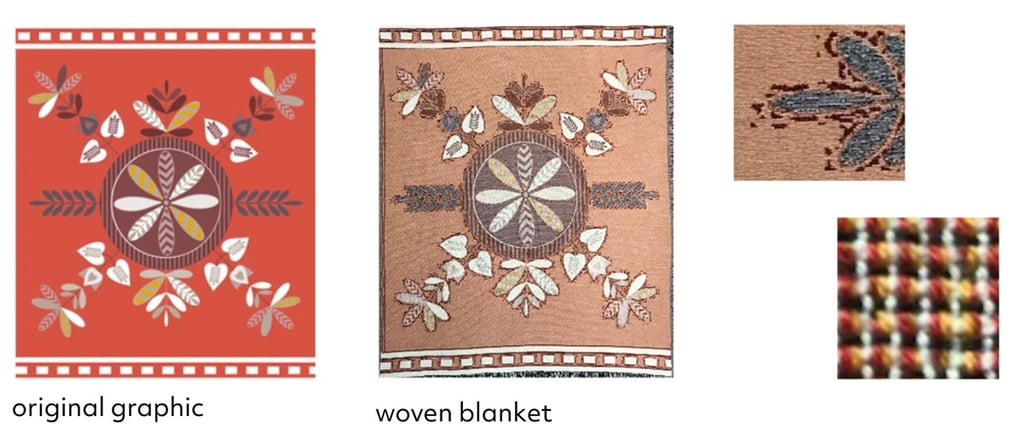
The following examples illustrate some of the challenges posed by this limited color palette when creating your Jacquard woven blanket. The background’s orange-red color — being absent from our weave color palette — has automatically been replaced with the nearest color match. As a result, the finished custom blanket has a background perceived as more of a yellow-orange color. In the detail, you can see that although it’s a combination of gold and red thread, it still doesn’t quite match the vibrancy of the original graphic.
In the test graphic below, the colorful geometric pattern contains a number of hot and vibrant colors. The woven version shows how the nearest available color can often result in large blocks of a single woven color where multiple like colors exist in the original graphic. The yellows, light oranges and even light greens in the top left section have all become the same golden color, together with the dark blues, purples and dark reds in the top right and bottom left sections.
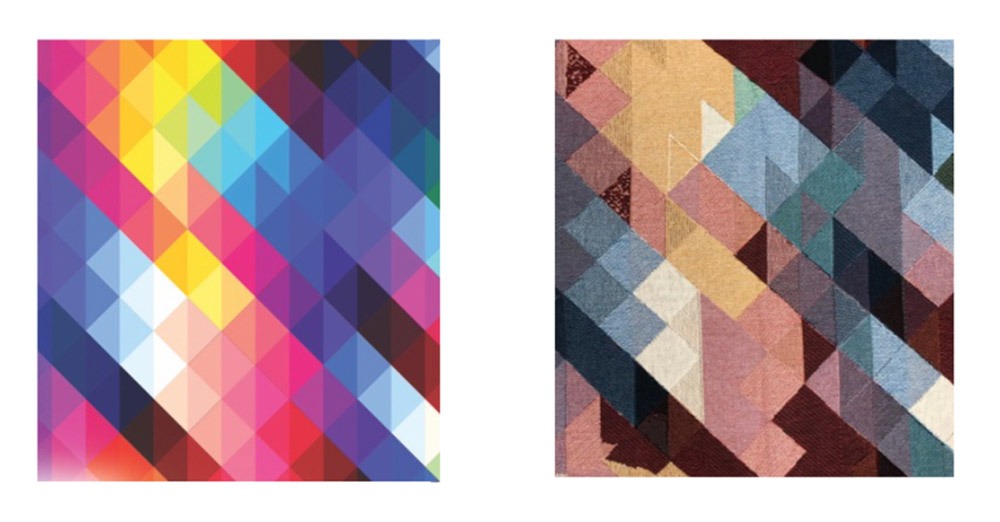
The vertical warp threads for this custom woven blanket are black and white, and the blocks of color are made by weaving the colorful weft threads over and under. Warp threads can alter the value of the weft threads. For example, black warp threads darken the color palette and add contrast to the lighter weft yarns, and white warp threads lighten the color palette and contrast with the darker weft yarns — but you’re still limited to those 195 colors.
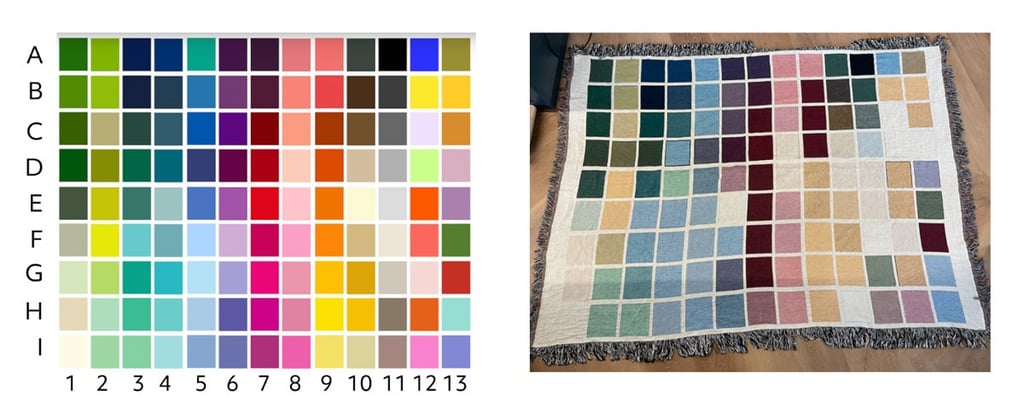
So, why do some colors that we perceive as similar in our reference image end up looking so different in the weave? The answer: hues and values.
Hues are colors that can be distinguished from one another — like blue and red. The purple-hued threads are colored with blue and red dyes. In the example above, the E6 purple is more red/pink than the I13 purple, which has more blue. Since we’re limited to the color palette above, the Jacquard woven blanket will inherit the nearest color match to accomplish the image. As you can see from the finished custom blanket, some purples appear blue, while others look more pink.
Value is the lightness or darkness of a hue, achieved through the black and white warp threads. For example, D13 is a light shade of pink, so more white warp threads are used to achieve the contrast with the other pink values that appear in the image (similarly with F6). Once again, the custom woven blanket inherits the best color match from the available palette, so rather than light pink, this might appear as white.
Gradients
Graduated areas will be reproduced as closely as the color palette allows, but we recommend avoiding graphics that rely on large, gently transitioning color fields when creating your Jacquard woven blanket.
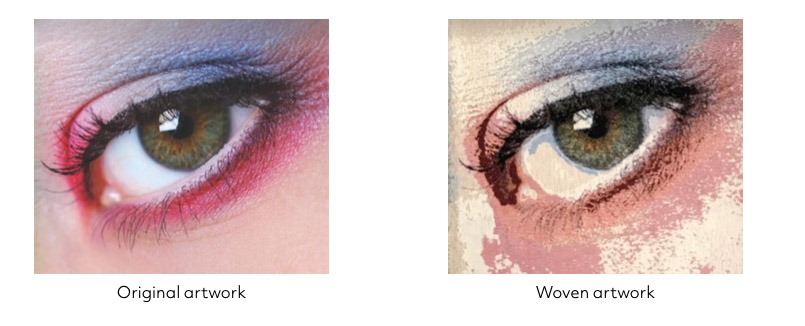
Resolution
Woven stitches don’t translate directly to pixels (the approximate equivalent is 12dpi), so some very fine details tend to get lost.
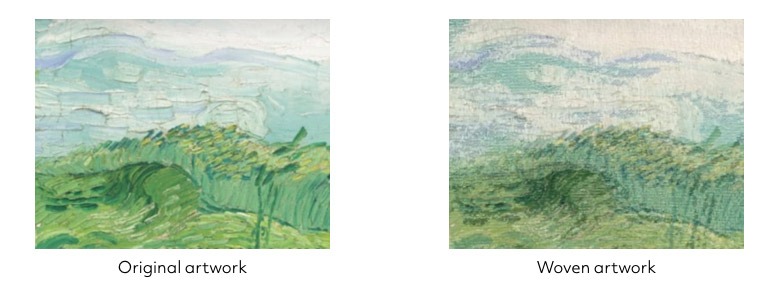
Replicating the woven effect
If you have Adobe Photoshop, you can follow the steps below to create an approximate preview of how your artwork will be reproduced on your custom woven blanket:
Reduce the saturation of the reds and greens. Select Image > Adjustments > Color Balance. Drag the first slider away from ‘red’ towards ‘cyan’, and drag the second slider away from ‘green’ towards ‘magenta’. Click OK.
Reduce the resolution to 12dpi. Select Image > Image Size. Clear the Resample check box. Type '12' into the Resolution text field, and type the original dimension into the Width text field. Click OK.
Add a textured weave transparent overlay. Add this image of a woven texture as a new layer in Photoshop. You’ll need to play with the opacity of the layer and the blending mode until your mockup looks like a blanket and you can see the design underneath.
Just FYI, this process is designed to create an approximate preview of how your image will be reproduced and is for mockup purposes only. Please don’t send us this image to print! The original will produce a better product.
To sum up…
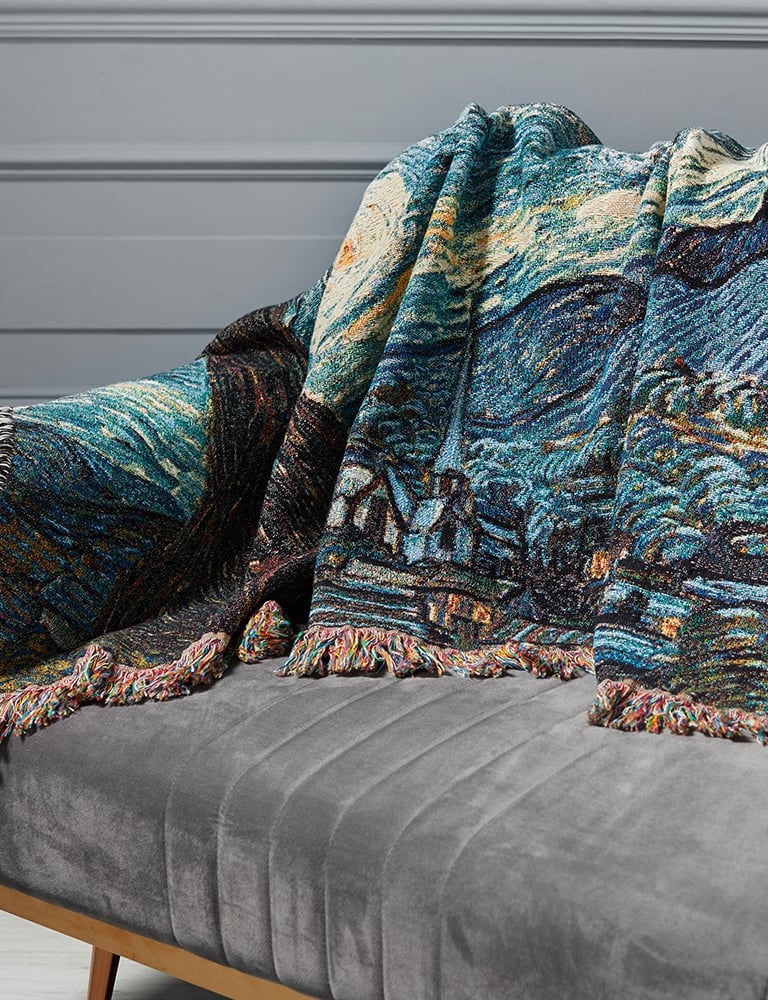
While working with woven products can be challenging, the rewards are well worth the effort. Our heirloom-quality Jacquard woven blankets — made from 100% cotton — can be enjoyed and passed down for generations.
To accomplish the best results with your custom woven blankets, just remember these three simple tips:
Bold color changes. Stay away from bright colors, and stick with high-contrasting bold color changes to get a finished product that better reflects the original image. You can check whether the primary colors of your artwork are found in our colour chart.
Busy is better. Large colour fields are generally difficult with woven products. Artwork with busy backgrounds, where attention to detail isn’t necessary, reproduce very well.
Enjoy them at a distance. Custom woven blankets are large and can be used as blankets or wall hangings. The images displayed on them are designed to be viewed from a distance of several feet or more. Fine details may not reproduce well, but at a distance, they likely won't be noticed. Oh! And if your image includes text, keep it large and bold if possible to keep it readable.
Luxuriously soft, beautifully textured, and ultra cosy, we can’t wait to see the custom blankets you'll create for yourself and as thoughtful gifts for your loved ones, too!
'MORROW & STONE
Archival Heirlooms for the Modern Legacy
© 2026 'MORROW & STONE. All Rights Reserved Substrates sourced from Prodigi
THE STUDIO
Our Philosophy
The Photoshop Protocol
Shipping & Logistics
Private Commissions
Terms of Provenance
THE COLLECTION
Giclée Fine Art
ChromaLuxe® Metal
Jacquard Textiles
Ferrous Steel
The Bound Archive
THE SAVOIR-FAIRE
Archival Pigment Infusion
Molecular Sublimation
Architecture in Fiber
Industrial Geometry
Monograph Engineering